


 Login: Finland
In modern invoice lifecycle management, everything starts with the sales ledger – not as a standalone record-keeping function, but as the operational backbone that drives transparency, control, and efficiency across the entire process.
While many organizations have invested in digital invoicing, the real transformation happens when the entire lifecycle, from invoice creation to payment and reconciliation – and everything in between – is managed as one unified workflow. At the heart of that shift is an integrated, continuously operating sales ledger.
This article looks at why the sales ledger holds such a central role in seamless invoice lifecycle management, what changes when it is run as a fully managed service, and how the right setup can move organizations from fragmented processes to a connected flow – with less operational burden and more strategic capacity for the finance function.
From fragmented setups to one continuous flow
In many large organizations, invoicing processes are still split between in-house teams and outsourced partners. This often results in multiple systems, disconnected workflows, and limited visibility across invoice stages.
The result is familiar: manual work, delays in payment allocation, and limited insight into payment behavior.
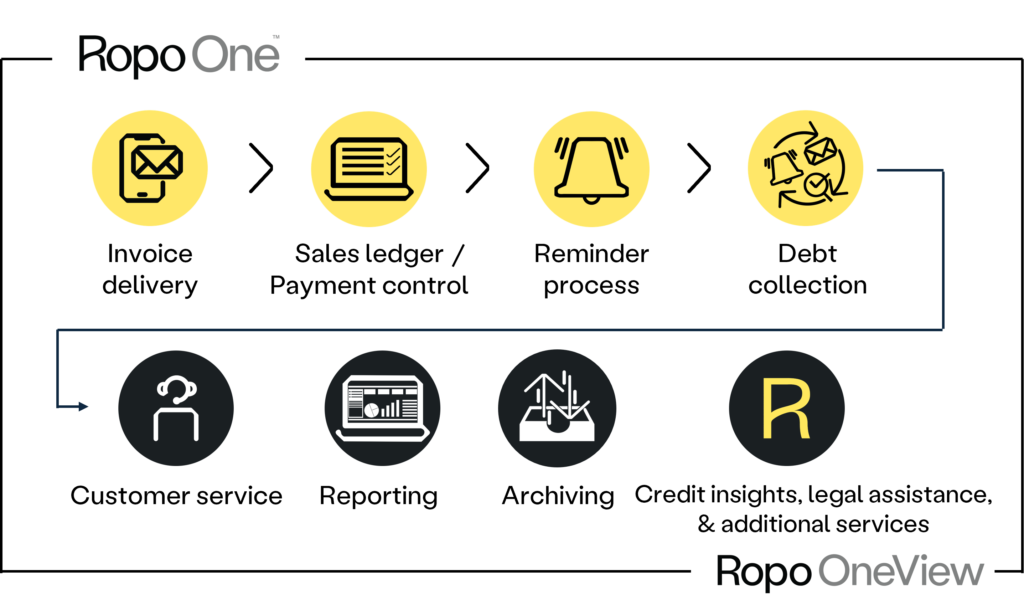
A modern invoice lifecycle approach replaces that fragmentation with a single, integrated workflow – where invoicing, payment monitoring, reminders, collections, and accounting are all connected through one platform. At the center of this is a continuously operating, highly automated sales ledger.
“In modern invoice lifecycle management, everything is connected and tailored. You can segment processes by customer groups, monitor performance in real time, and still stay fully in control – even when key functions are outsourced. In fact, many of our clients say they gain more control than before. That’s exactly the goal”, says Kati Ullgrén, Group Head of Accounting Services at Ropo.
The sales ledger as an operational engine
In Ropo One®, the sales ledger runs continuously in the background, acting as an intelligent engine that powers the entire invoice lifecycle.
Behind the scenes, it:
-
monitors due dates and payment behavior
-
triggers next-step actions automatically
-
allocates incoming payments
-
matches funds to open receivables – even when payment details are incomplete
At the same time, the client’s own system stays continuously up to date, ensuring full visibility without manual intervention.
Payment processing within Ropo One® currently operates at a 98% automation level, powered by advanced matching capabilities. But the real value of automation is not just efficiency – it is consistency and reliability at scale.
Standardized automation means payments are processed quickly and accurately, while workflows can still be adapted to different customer segments. And when situations require human judgment, such as unclear payments or exceptions, Ropo’s sales ledger specialists step in to ensure accuracy without slowing down the process.
The result is a sales ledger that combines the consistency and speed of intelligent automation with the expertise of an experienced team.
“The biggest efficiency gains are achieved when the entire invoice management flow is updated. That’s when we can automate payment processing fully and start evaluating the process as one. This is where real optimization becomes possible – and that is true across markets, whether in Finland, Sweden, Norway, or a global setup,” Kati continues.
Real-time data creates real business value
The sales ledger operates at the most granular level – invoice by invoice, customer by customer. It tracks what has been invoiced, what has been paid, what remains outstanding, and how payments progress against agreed terms.
Because Ropo One® is seamlessly integrated with client’s systems, the data is continuously updated enabling not only accurate accounting, but also better decision-making.
The same data also powers reporting and business intelligence. Instead of relying on static reports, organizations gain access to live operational insight. This makes it possible to:
-
identify slow-paying customer segments early
-
adjust credit and collection strategies proactively
-
improve forecasting and risk management
The same data also feeds accounting directly. Ropo One® delivers structured, auditable material to the general ledger – ensuring alignment between operations and financial reporting without manual reconciliation.
One service. One platform. Full control.
By running the sales ledger as a fully managed service, Ropo brings the entire invoice lifecycle together:
Invoice statuses are updated directly in the client’s existing systems. Late-payment actions are triggered automatically. All lifecycle activities are managed end-to-end on one platform.
There is no need for separate reminder tools, workarounds, or manual monitoring.
What traditionally requires multiple systems and handovers is delivered as one continuously running service – designed to support the full invoice lifecycle management, not just individual steps.
See how Ropo turns a fragmented invoicing process into one streamlined flow that helps accelerate cash flow. The article continues below the video.
Why the sales ledger makes the difference
Not all invoice lifecycle solutions deliver the same value. The real advantage of modern invoice lifecycle management is not just digitization – it is cohesion.
“When evaluating solutions, it’s important to look at the full setup,” Kati notes. “Is the process truly seamless? Do you have access to all relevant data? Does the solution reduce complexity – or quietly add to it?”
In practice, invoicing transformation often starts with familiar challenges: limited visibility across invoice stages, partial or rigid automation, a lack of segmentation capabilities, and pressure to manage growing volumes with existing resources.
“In many cases, organizations are simply looking to streamline their invoicing flow. And we consistently find that processes previously handled manually can be automated. That’s where the real value is unlocked,” she concludes.
The foundation for next-level invoicing
Modern invoice lifecycle management is not just about sending invoices – it is about creating a connected, intelligent, and continuously optimized process.
By combining automation, real-time data, and expert support, organizations can move from fragmented operations to a fully optimized invoice lifecycle – delivering better efficiency, better insight, and ultimately, better business outcomes.
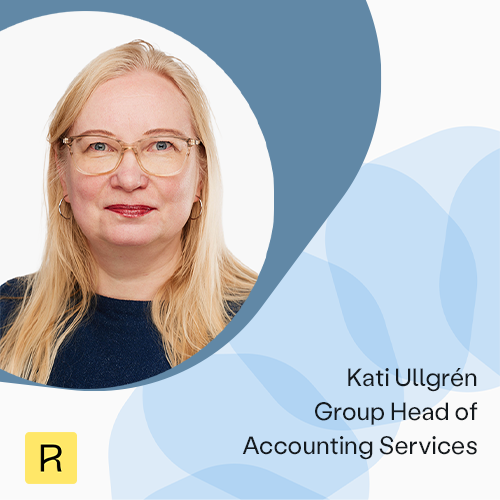
Kati Ullgrén
Group Head of Accounting Services


Ropo is the Nordic market leader and pioneer in invoicing technology, transforming the invoicing flow end-to-end. We help companies unify and streamline all invoicing processes to create a seamless workflow, providing full visibility, elevated customer experience, and improved control with a single overview. Committed to exceptional service and our one-platform strategy, we proudly support over 10,000 clients across Finland, Sweden, Norway, and Denmark. Learn more about Ropo at ropo.com.
Ready to rethink how your sales ledger works?
Ropo One® can take on the full operational responsibility for your sales ledger – and connect it to the broader invoice lifecycle, so your finance team can focus on work that actually moves the business forward. Get in touch to explore what fully unified invoice lifecycle management could look like for your organization.

How Nordic market leaders improved efficiency and cash flow
What if invoicing could accelerate your financial flow?
Subscribe to our 3-email case series to see how companies like Caruna, Strawberry, and Bodø Energi streamlined their invoicing, reduced manual work, and boosted financial visibility – all through Ropo’s proprietary platform.
Three stories. Three strategies. Delivered directly to you.
Read more
Insights & Trends
5 Hidden Costs in Your Invoicing Process – and How to Fix Them
Read more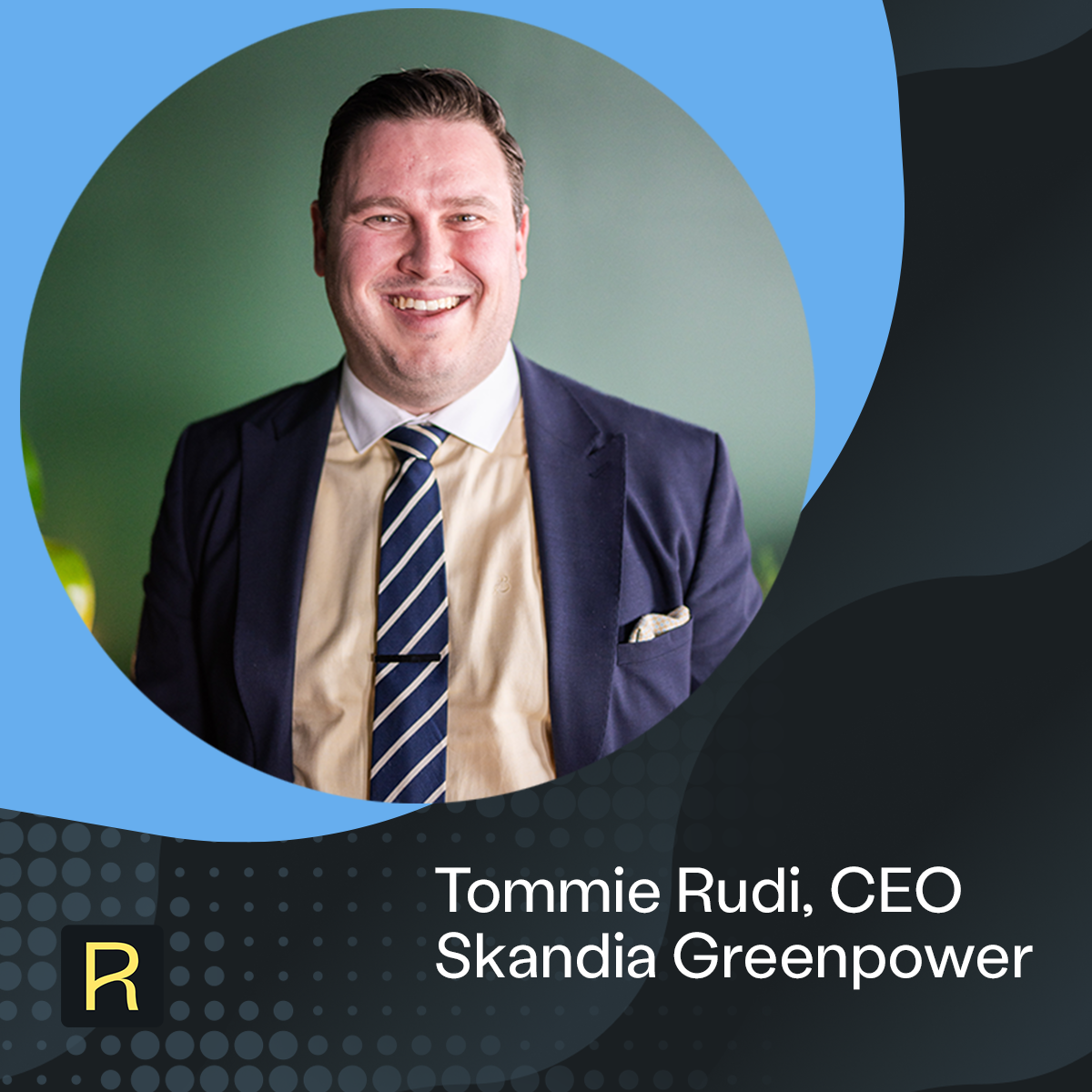
Insights & Trends
Inside the CFO Office: Tommie Rudi, Skandia Greenpower
Read more
Insights & Trends
Ropo One® – Where Technology Meets Expertise
Read more
Insights & Trends