


 Login: Finland
Every invoicing transformation is unique. The starting point, existing systems, level of automation, and business goals vary from company to company. However, while every transformation journey is different, the questions CFOs, invoicing managers, and operations leaders ask when evaluating whether to transform their invoicing and payment operations are often very similar.
Companies want to understand whether the transformation is worth the investment, how much time and resources it requires, and how their teams and customers will benefit from the change.
We have collected the most common questions together with answers that apply across markets and industries. These themes are consistent regardless of the company type or current operating model.
1. What is the main difference with Ropo One® compared to other systems?
Ropo One® is designed to orchestrate the invoice-to-cash process end-to-end. It unifies invoice workflows into one platform, removing fragmentation and enabling full visibility, improved control, and greater efficiency.
While many systems focus on individual parts of the process, Ropo One® manages the complete invoice lifecycle, from invoice delivery and payment monitoring to reminders, collections, customer communication, and reporting.
Ropo One® also enables seamless collaboration between Ropo and client teams while providing visibility into the entire invoice lifecycle, end-customer interactions, and service performance. It also powers MyRopo, our end-customer platform, which provides real-time invoice information, customer service, and self-service capabilities.
In short, Ropo One® is an all-in-one platform for invoicing and payment operations that connects seamlessly with the client’s financial ecosystem.
2. What will happen to my current system?
Most clients continue using their existing ERP system – Ropo One® operates as the invoice lifecycle management layer on top of it. Invoice creation remains unchanged. Invoice data flows from the existing system into Ropo One®, where delivery, payment monitoring, reminders, and collection activities are managed according to agreed processes.
Integration with Ropo One® ensures payment status and accounting data flow back into the client’s systems, providing real-time transparency and keeping records up to date without manual reconciliation. The goal is to remove friction from invoicing workflows without disrupting the core IT environment.

3. What affects the implementation time?
Implementations typically take 3–5 months from kick-off to go-live, but the timeline depends on several factors, including:
-
The complexity of the client’s financial ecosystem and number of integrations
-
Company structure – for example, a single company versus a group structure
-
Number of countries, currencies, and business units involved
-
Customer segmentation and process variations
-
Speed of decision-making and availability of client resources
During the implementation project, all invoice workflows from invoice data intake to payment are designed, documented, and optimized. Automation is configured according to client needs, industry best practices, and regulatory requirements. Customer touchpoints and letter templates are reviewed, and improved where relevant.
Ropo’s project team leads the implementation, combining technical expertise with process design capabilities. Clients contribute business requirements, segment definitions, approvals, and the data needed for validation.
We have refined this framework across thousands of projects, helping ensure that services operate as intended from go-live and that performance KPIs become available as new processes take effect.
4. When we start the collaboration, what are our main responsibilities?

Responsibilities are clearly shared between Ropo and the client, depending on the selected service package and level of outsourcing.
In all cases, the client remains responsible for creating the invoice. We provide the technology, expertise, and operational capabilities to manage the invoice-to-cash process efficiently. This includes process design, technical implementation, service delivery, customer service, and continuous performance optimization together with the client and the Ropo OneTeam.
With us, clients are never alone with invoicing operations. Our implementation team guides clients through structured project phases, and after go-live, our dedicated client team continues to support performance optimization and ongoing development. It is a long-term partnership rather than a vendor relationship.
5. I have multiple customer segments that need different invoicing flows. Is that possible?
Yes – and it’s a common scenario for our clients.
Ropo One® is built so that one standardized back end can support multiple customer segments, product brands, legal entities, and countries simultaneously, with each configured according to its specific needs. Different invoicing flows, layouts, and late payment workflows can all be configured without adding manual work or compromising automation.
The standardization is built into the platform; the flexibility is in the configuration. This gives clients a single partner, providing advanced reporting, and complete financial visibility across diverse customer groups, brands, subsidiaries, and markets.
6. What is the best practice for different customer segments and their late payment flows?
Best practice always starts with business needs and customer segmentation. Factors such as B2B versus B2C customers, level of digitalization, invoice value, strategic importance of the customer, payment behavior, credit policy, and applicable legislation all influence the optimal invoicing and late payment process.
On average, Ropo manages more than 160 million invoices and deliveries every year. Based on this extensive data, we continuously identify best practices and performance benchmarks that help clients optimize their invoice workflows. The insights help determine where automation delivers the greatest value, where customization is needed, and where approval points should be added before automated processes continue.
Within Ropo One®, advanced segmentation allows workflows to be tailored for different customer groups, ensuring strategically critical customers follow dedicated paths with exceptions and additional steps, while other segments follow more streamlined processes. Segmentation rules can be continuously refined based on performance data.
The result is an efficient invoicing process that also helps maintain strong customer relationships.
7. I want to improve DSO, but I already have a high digitalization rate. Is there a best practice for this kind of situation?
This is one of the most common questions we hear, particularly from companies managing large volumes of B2B invoices.
Digital invoice delivery already contributes to faster payments and improved DSO, but delivery channel is only one part of the equation. Additional opportunities often include optimizing invoicing cycles, payment terms, late payment automation, and the digitalization of reminder communications.
For B2B companies, improvements may also come from stronger credit policies, customer credit checks during onboarding, and continuous monitoring of payment behavior and creditworthiness throughout the customer relationship.
For consumer businesses, one of the highest-impact areas is the payment flow. Making payments as easy as possible through one-click payment options using MyRopo Link or Paylink can significantly improve payment speed. Some clients categorize traditional email invoices as digital – upgrading to MyRopo invoices with dynamic payment links reduces customer friction and supports faster payments.
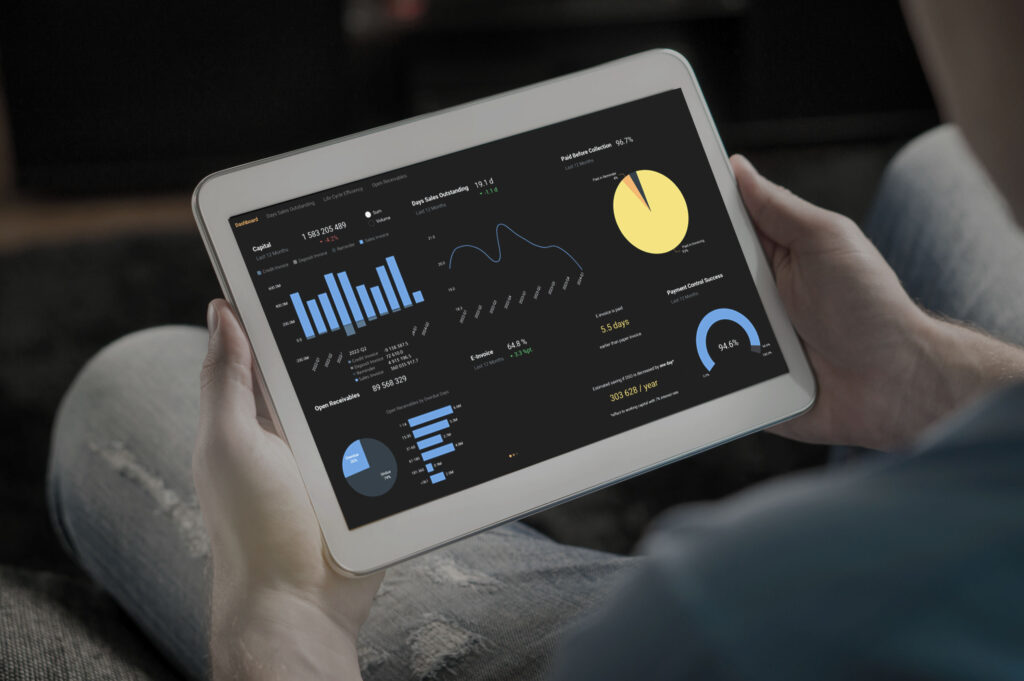
Ropo OneView® makes these levers visible: you can monitor which customer segments are the fastest payers and compare payment schedules across channels.
Read more about how Nordic companies improve cash flow and reduce DSO
8. I want to outsource the entire invoice-to-cash flow including sales ledger. What are the requirements?
In most cases, Ropo can take over the entire invoice-to-cash process during the implementation project. In some situations, the transition is completed in phases, depending on the client’s preferences and readiness.
Integration with Ropo One® is typically straightforward thanks to more than 70 pre-built connectors for leading ERP and accounting systems across the Nordics.
The primary requirement is the ability to provide structured invoice data containing the information needed for invoice delivery and accounting, with agreed integrations (typically API-based) enabling continuous data flow between the client’s environment and Ropo One®.
From a CFO’s perspective, the most important outputs are the data that flows back into the finance environment: real-time payment status, auditable accounting material, structured journal entries ready for your general ledger, and a complete audit trail covering every receivable. Roles, reporting cadence, and ownership are defined upfront, so finance teams know exactly what they retain and what Ropo operates on their behalf.
9. Do you have a self-service channel for end customers?

Yes. MyRopo is our digital self-service channel for end customers, available 24/7 with strong authentication. End customers can view and pay invoices, set up payment arrangements, access their invoice archive, and communicate securely through the MyRopo Message Center.
Two additional services extend MyRopo into the client’s own digital channels. MyRopo Link enables direct access through the client’s website or mobile application without separate authentication, while Paylink provides the fastest route to payment in situations where a full self-service experience is not required.
MyRopo is available in Finnish, Swedish, Norwegian, and English.
Discover How to Use MyRopo – Manage Your Invoices and Payments | Ropo
10. Is your customer service located in the Nordics?
Yes. Our business client support and end customer service teams are located in Finland, Sweden, and Norway, providing support in local languages and operating according to the practices and expectations of each market.
End customers reach us through digital channels, with self-service available 24/7 in MyRopo, or by phone. This local-first approach matters: payment culture, regulatory expectations, and communication norms vary across the Nordics, and Nordic-based service operations read those nuances naturally, as part of how we work.
Beyond implementation: where the real optimization begins
Going live is the starting point, not the finish line. The questions clients ask before signing an agreement are very different from the ones they ask after twelve months of collaboration – and that’s where the real value of a unified invoicing flow becomes visible.
Once invoicing is running smoothly, attention turns to continuous optimization: increasing digital delivery rates, further improving DSO, reducing credit losses, and promoting MyRopo for flexible payment handling.
A streamlined and optimized invoice-to-cash process can deliver significant impact, but continuous improvement comes from small, data-led adjustments – adjusting customer segmentation, expanding automation, fine-tuning invoice communications, guiding customers toward digital channels, or catching early signals of credit risk before they turn into write-offs. Ropo OneView® surfaces the relevant KPIs in real time, and our client teams work alongside you to translate those signals into concrete actions.
Want to learn more about our implementations in practice? Read Smooth Project Implementations
Ready to streamline your invoicing flow and enhance financial oversight?
Ropo’s experts are here to support you whenever you need assistance optimizing your invoicing processes and cash flow management for improved control, efficiency, and transparency.
Reach out to your local sales team or continue exploring our one-platform approach here.
Ropo is the Nordic market leader and pioneer in invoicing technology, transforming the invoicing flow end-to-end. We help companies unify and streamline all invoicing processes to create a seamless workflow, providing full visibility, elevated customer experience, and improved control with a single overview. Committed to exceptional service and our one-platform strategy, we proudly support over 10,000 clients across Finland, Sweden, Norway, and Denmark.

How Nordic market leaders improved efficiency and cash flow
What if invoicing could accelerate your financial flow?
Subscribe to our 3-email case series to see how companies like Caruna, Strawberry, and Bodø Energi streamlined their invoicing, reduced manual work, and boosted financial visibility – all through Ropo’s proprietary platform.
Three stories. Three strategies. Delivered directly to you.
Read more
Insights & Trends
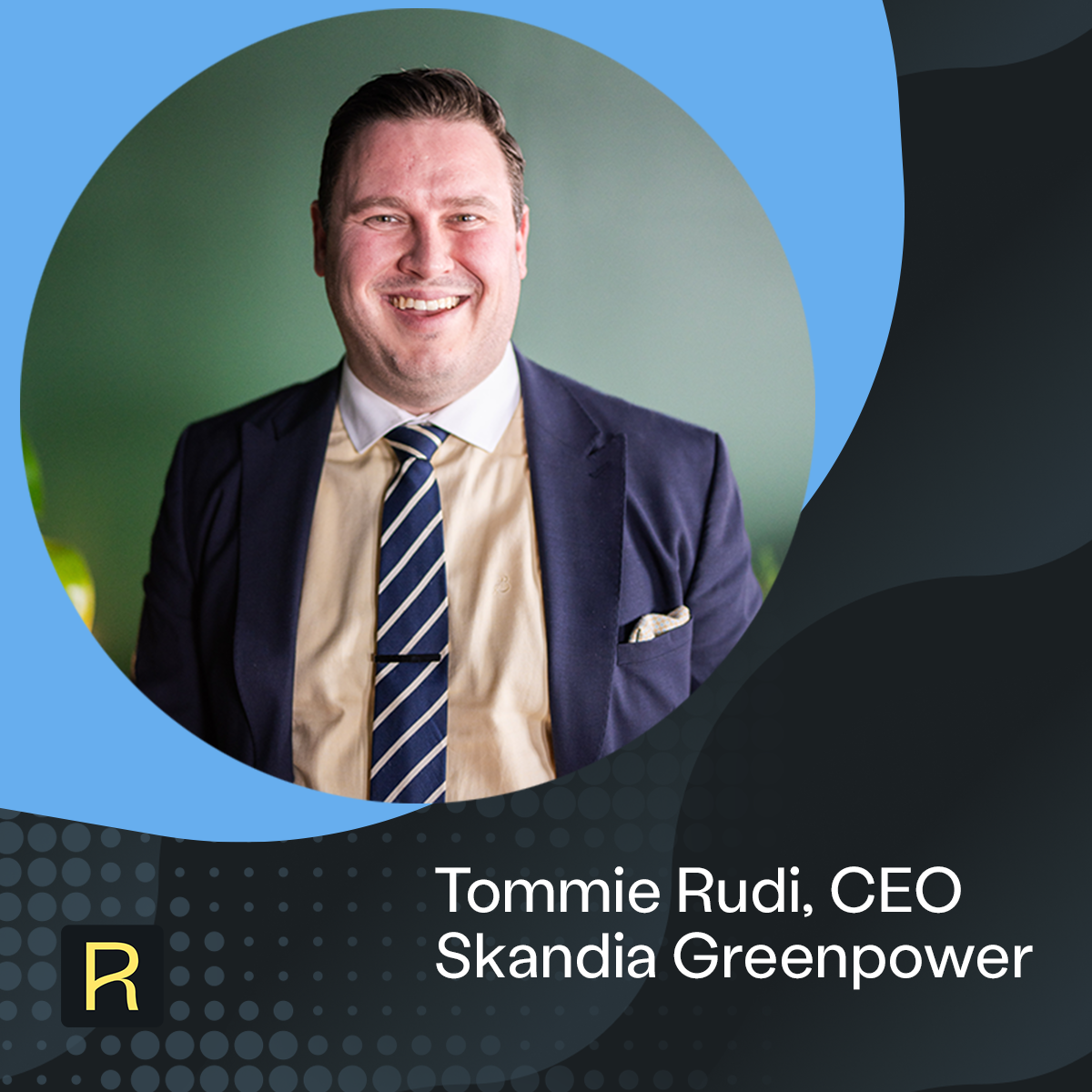
Inside the CFO Office: Tommie Rudi, Skandia Greenpower
Read more
Insights & Trends
Ropo One® – Where Technology Meets Expertise
Read more
Insights & Trends
What CFOs Value Most in Their Ropo Partnership: Automation, Service Quality, and Faster Cash Flow
Read more
Insights & Trends